The short answer
Yes — at a bodyshop, weather is essentially irrelevant, because painting is done in a sealed, heated and filtered spray booth that controls temperature and humidity year-round. The booth is held at the conditions the paint manufacturer specifies, so cold or rain outside does not affect the finish. Mobile outdoor repairs are different: paint, primer and filler need the surface to be warm enough and dry to cure and adhere, so cold, damp or rainy conditions can delay or prevent a driveway job. Moisture on the panel can cause poor adhesion or blemishes, and low temperatures slow curing. For weather-sensitive work in winter, a booth is the reliable route.
The honest answer depends entirely on where the work is done. A booth makes weather a non-issue; an open driveway does not, which is why winter sometimes pushes a job indoors.
Weather and repairs
- Bodyshop boothWeather-proof, controlled year-round
- Mobile outdoorsLimited by cold and damp
- Paint needsWarm enough surface, dry conditions
- Risk of dampPoor adhesion, blemishes
- Winter adviceBooth work for paint-critical jobs
Why a spray booth makes weather irrelevant
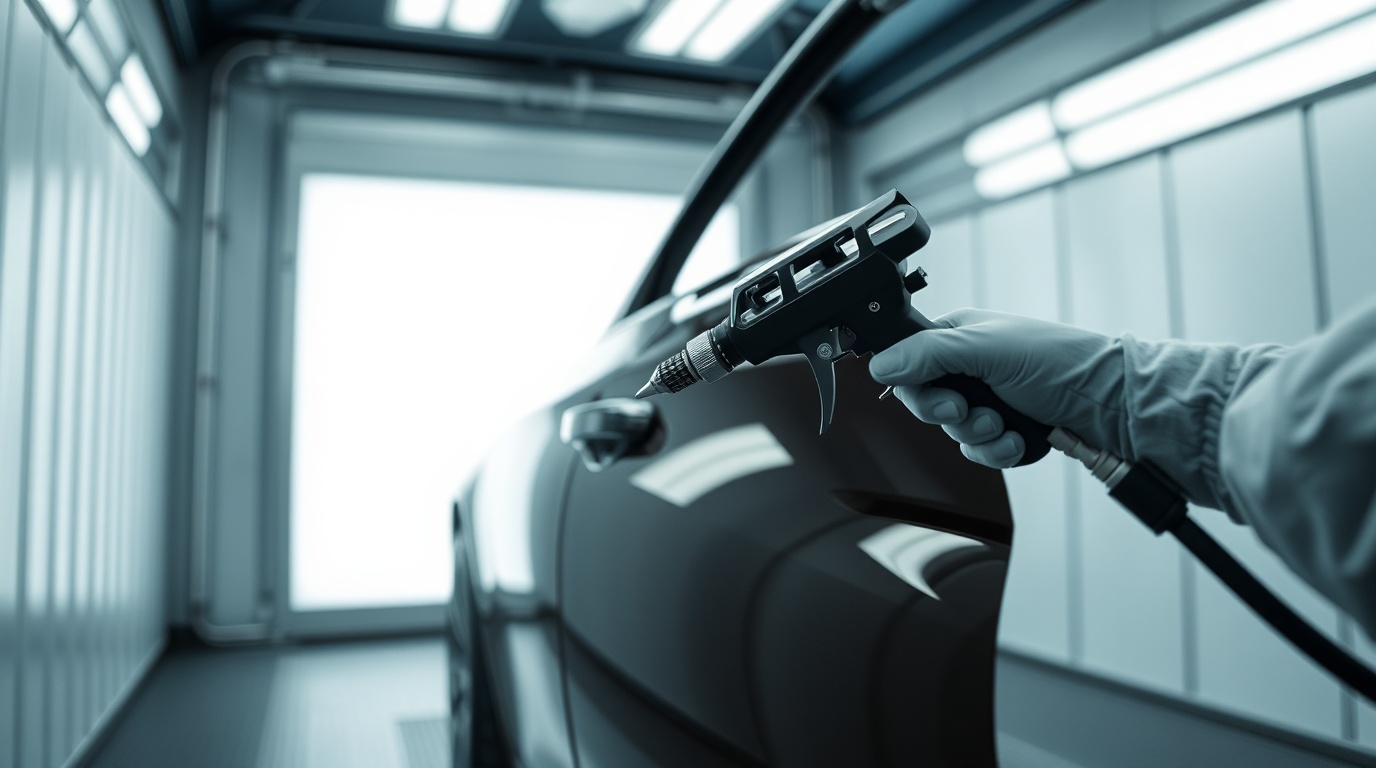
A bodyshop sprays inside a spray booth — a sealed room with filtered air, controlled airflow and, crucially, heating. The booth is brought up to the temperature the paint maker's data sheet specifies for spraying and for the bake cycle, and the filtered air keeps both dust and moisture under control. Because the conditions inside are managed, what is happening outside — frost, rain, wind or summer heat — has no bearing on the finish.
This matters because paint cure and adhesion are sensitive to:
- Temperature — too cold and 2K paint cures slowly or unevenly; the booth heat solves this and force-cures the lacquer.
- Humidity — too much moisture in the air can cause blemishes such as blooming in the lacquer; filtered booth air controls it.
- Airborne dust and debris — wind-blown grit outdoors lands in wet paint; the booth filters it out.
So a bodyshop can carry out filler work, priming, painting and baking in the depths of a wet British winter exactly as it would in summer, because the booth is the environment, not the weather. The booth's heating does two jobs: it holds the air at the right temperature for the paint to flow and lay down evenly, and it provides the bake cycle that force-cures 2K lacquer to a hard film in a fraction of the time air drying would take. The exact temperature and duration follow the paint manufacturer's data sheet, not the season outside. Many bodyshops also use a low-bake oven booth that can switch between a spraying mode and a baking mode, so the panel is sprayed and then cured in the same controlled space.
Where mobile and outdoor repairs are limited
A mobile SMART repair on your driveway does not have a booth. The technician works in the open air, often with a gazebo or screens and a portable curing lamp, but the surrounding conditions still matter. The key limits are:
- Cold — primer, filler and paint cure slowly or poorly below the temperatures they are formulated for, so a frosty morning can delay or rule out a job.
- Damp and rain — moisture on the panel, or rain during the work, risks poor adhesion, trapped water and finish blemishes. A wet or even heavily humid day is often a no-go for spraying.
- Wind — blows dust and debris into wet paint and disrupts the spray pattern.
Good mobile technicians manage this by using screens and heat, choosing dry windows in the forecast, and by being willing to reschedule when conditions are wrong. Some repairs that do not involve spraying — paintless dent removal, for instance — are far less weather-sensitive, because there is no paint that needs to cure.
There is a specific risk worth naming. Spraying lacquer in cold, humid conditions can cause blooming (also called blushing) — a milky, cloudy haze in the clear coat caused by moisture being drawn into the curing film. Spraying onto a panel that is too cold can cause poor flow and adhesion, and condensation forming on a cold panel can sit invisibly under the primer. These are exactly the faults a heated, filtered booth is designed to prevent, and exactly why an outdoor repair in the wrong conditions is a false economy — the time and money are wasted if the finish has to be redone.
Choosing the right route for the season
The practical takeaway is to match the job and the season to the setting:
| Conditions | Booth (bodyshop) | Mobile / outdoor |
|---|---|---|
| Cold / frosty | Fine — booth heated | Often delayed or unsuitable |
| Wet / rainy | Fine — booth sealed | Usually postponed for spraying |
| Humid | Controlled by filtration | Risk of blemishes |
| Dry and mild | Fine | Suitable for SMART repairs |
Indicative guidance only — actual suitability depends on the job, paint and technician.
Practical advice if the weather is poor
If you need bodywork done in a cold or wet spell, a few things help:
- For any paint-critical job — a full panel, a respray, or colour-matched spraying — use a bodyshop with a heated booth, where weather is a non-issue.
- For a small mobile repair — be flexible on timing. A dry, milder day gives the cleanest result, and a good technician will book around the forecast.
- For non-spray jobs — paintless dent removal is far less weather-dependent, so winter need not delay it.
- Listen if a technician postpones — rescheduling because of damp or cold is a sign of care, not an excuse. A spray done in the wrong conditions can fail, blemish or peel.
In short, British weather rarely stops bodywork getting done — it just decides where. A booth makes the season irrelevant; an open driveway means waiting for the right conditions. If timing is tight in winter, the booth route removes the weather variable entirely.
It is also worth remembering that weather affects more than just the spraying. Filler and primer need a warm, dry surface to key and cure properly too, so even the prep stages of an outdoor repair are slower and less reliable in the cold. And a panel brought in from a freezing car park needs time to reach a sensible working temperature before any paint goes near it, because spraying onto cold metal invites condensation and poor adhesion. A heated workshop handles all of this as a matter of course, which is the deeper reason paint-critical work in a British winter belongs indoors rather than on a driveway.
Frequently asked questions
Can a car be resprayed in winter?
Yes, easily, at a bodyshop. Spraying is done in a heated, sealed, filtered booth held at the paint manufacturer's specified conditions, so frost, rain or cold outside makes no difference to the finish. Winter only complicates open-air mobile work, not booth work.
Why can't paint be sprayed outdoors in the rain?
Moisture on the panel or in the air can cause poor adhesion, trapped water and finish blemishes such as blooming, and low temperatures slow or spoil the cure. Wind also blows dust into wet paint. For these reasons outdoor spraying is usually postponed in wet weather.
Is paintless dent removal affected by cold or wet weather?
Much less than spraying, because there is no paint, primer or filler that needs to cure. Working the metal back to shape is possible in a wider range of conditions, though very cold metal can be slightly less forgiving, so a milder, dry day is still preferable.
Sources & further reading
Figures on this page are typical UK ranges drawn from published sources and depend on your specific car and damage. They are guidance, not a quotation.